Description
spade
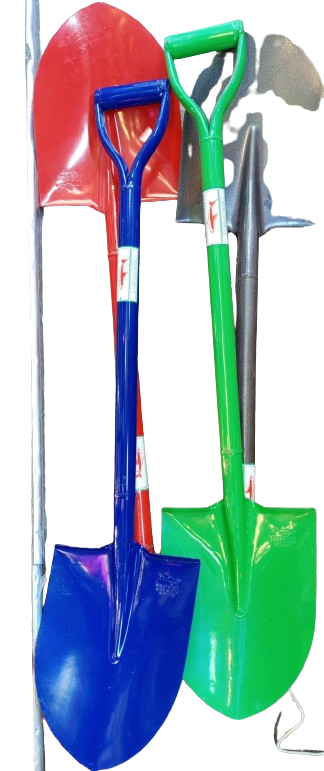
A spade is ahand-held digging tool used mainly in gardening, farming, landscaping and construction. It’s designed to cut into soil, dig holes, and work earth precisely, unlike a shovel, which is mainly for scooping and moving loose material
spade consists of:
-
Blade: A sharp, flat or nearly flat metal blade — often rectangular or slightly pointed — that cuts into the ground.
-
Handle: A long shaft made of wood, metal, fiberglass, or plastic that lets you push the blade into the soil with your foot or hands.
Typically, the blade is narrower and flatter than a shovel’s, and the edge is sharpened so it can slice through hard soil and roots.
🔑 Key Features of a Spade
⚒️ Sharp, Flat Blade
-
The blade has a straight, sharp edge designed for cutting soil cleanly.
-
Often rectangular or slightly pointed, ideal for precise digging.
🪵 Sturdy Handle
-
The handle gives leverage and control when digging.
-
Many have a D-handle or T-handle for a comfortable grip and better force application.
🪴 Designed for Precision Work
Spades are especially effective at:
-
Digging planting holes for flowers, vegetables, shrubs, or trees.
-
Turning and loosening soil to improve aeration or mix in compost.
-
Edging garden beds to create neat borders.
-
Removing sod or cutting roots with less disturbance to surrounding plants.
📍 How It Differs from a Shovel
A spade differs from a shovel in several ways:
| Feature | Spade | Shovel |
|---|---|---|
| Blade | Flat, straight, sharp | Curved, scoop-shaped |
| Primary Use | Cutting and digging soil precisely | Scooping and moving loose materials |
| Design | Precision tool for digging | Broader tool for lifting & shifting |
| Handle | Often shorter or mid-length | Often longer for more leverage |
🪓 Common Uses
People use spades for:
-
Gardening: planting, weeding, edging beds.
-
Landscaping: digging trenches or holes for posts.
-
Farming: breaking compacted soil.
-
Construction: precise excavation in tight spaces.


Reviews
There are no reviews yet.